El lugar de México en América Latina Saúl Escobar Toledo
El peso de la deuda Saúl Escobar Toledo
When multiple crises confront global leaders, some receive less attention than they should. One such is an(other) external debt crisis in developing countries, which is likely to be prolonged with long-term spill overs. However, while most observers admit that a debt crisis is unfolding, a commitment to find a lasting solution is absent. The elements of such a package are known. It must include official debt write-offs, large private creditor haircuts and the channelling of cheap liquidity to less developed countries through mechanisms like enhanced SDR issues. While failure to deliver on these fronts is preventing resolution, the resort to austerity in the midst of a crisis is imposing huge burdens on the majority in debt stressed countries.
The posts in this section monitor and analyse the evolving crisis, and offer viable and progressive alternatives.
As the Covid-19 pandemic spread across countries, governments across the world have imposed lockdowns and taken other drastic measures to control the contagion. This has led to unprecedent shocks to the global economy, as economic activity has come close to collapse in many regions of the world, affecting both demand and supply.
The articles in this section analyse the economic processes in this still-unfolding story, analysing the effects on the economy and different segments, the policy responses and other proposals for coming out of this crisis.
Covid-19 in India – profits before people Jayati Ghosh
Vaccine Apartheid Jayati Ghosh
The announcement of a BRICS development bank in the context of the ongoing global economic turmoil assumes a special significance. Some perceive it as an alternative to the already discredited World Bank with its North Centric leadership resulting in a dogmatic imposition of neo-liberal conditionalities on the indebted South; many assume this as a watershed, signaling the shift in global economic governance from the traditional powerhouses of the North to the newly emerging powerhouses of the South; while others perceive it as a tool to be used by the member countries to increase their influence in their respective Southern pockets.
This section includes articles analysing the emergence of BRICS Development Bank and its possible implications for global economic governance, regional impact of the BRICS nations, and other repercussions.
Following the financial crisis, much has been done for preventing systemic failure in the financial sector, stalling economic downturn and ensuring a recovery. However, the adequacy and appropriateness of the measures adopted remain questionable. As far as reforming the financial sector is concerned, despite a spate of proposals, agreement on the appropriate mix of policies and the progress with implementation have been limited. This section presents papers and articles that analyse the adequacy of various proposals and measures, the challenges that could arise at the time of implementation and advocate additional or alternative measures. Some of these papers also take a renewed look at the veracity of the arguments given for explaining the genesis of the crisis.

Austerity, Dispossession and Injustice: Facets of the Debt Crisis in Sri Lanka Ahilan Kadirgamar
Sri Lanka defaulted on its external debt for the first time in its postcolonial history in April 2022. The International…
Fetishising the Growth Rate of GDP Prabhat Patnaik
John Stuart Mill was among the foremost liberal thinkers of modern times who wrote extensively on economics and philosophy. Though under the influence of his wife Harriet Taylor Mill, he…
The Debt Trap and the Global South Ahilan Kadirgamar
A ‘debt trap’ is ensnaring the Global South, a crisis forcing governments into difficult choices. How do these debts lead to indirect taxation, subsidy cuts, and the resulting hardships for…
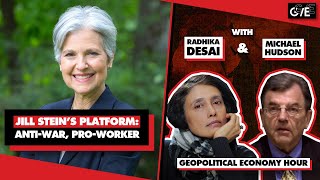
Challenging the Duopoly: Jill Stein on why she’s running for US president as Green Party Candidate
African Economists Advocate for New Debt Restructuring Approach in Accra Declaration

Frontier Market Debt Distress and Resolution
What is China's Future? Economic Decline, or the Next Industrial Revolution?
Eight African countries in Debt Distress
The reality of Bidenomics: How good was Biden for the economy?
Budget 2024 : An election budget or an IMF budget..?
Global Debt is unpayable: How Wall Street traps poor countries, profiting rich ones
Joseph Stiglitz addresses Joint Meeting of ECOSOC and 2nd Committee
M. S. Swaminathan interviewed by Jomo Kwame Sundaram at FAO
Domestic debt restructuring robs working people’s savings

NAM 2.0+G77 vs G7+NATO+OECD+WEF

Decoding the New Global Financing Pact Summit

Professor K S Jomo - Facing Up to War, Military Industrial Complex, Food Security and Central Banks

Debunking the myth of the financing gap
Jayati Ghosh on Sovereign Debt, China, Inflation, Capital Markets and Left Activism

Jayati Ghosh: "Brazil does not need high funds or surpluses"

Sustainable Development Strategies for the XXI Century

Debt Restructuring and Adjustment: Cases of Sri Lanka and Zambia
Improving the Solutions for Sri Lanka's Debt Crisis
Lessons from Sri Lanka's Sovereign Debt Crisis
Will there be another Debt Crisis? Current economic challenges facing the Global South

Rising U.S. Interest Rates Push Countries in Global South Toward Economic Collapse
Understanding money and the dollar system's contradictions with Radhika Desai & Michael Hudson
What causes inflation? Economists Radhika Desai & Michael Hudson explain
Feminist Economics 101: Jayati Ghosh interviewed by Muzna Alvi
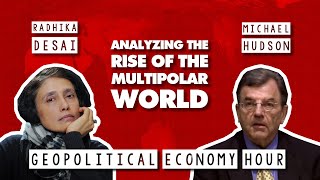
Multipolarity, decline of US Hegemony

A Conversation with Jayati Ghosh on 'Development in the of Climate Crisis'
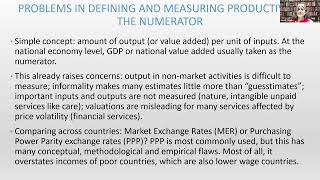
What do we really know about productivity differentials across countries?
C. P. Chandrasekhar on legacy capital accumulation in the developing world
C. P. Chandrasekhar on the repurcussions of neoliberal policies on the developing world

Jomo: Russian aggression in Ukraine, Western sanctions & crisis for developing countries

Jomo: MMT & Central Bank Financing for Development Financing in SE Asia

Jomo: TRIPS waiver, & how the East vs. the West dealt with COVID-19
Jayati Ghosh on India: From Crisis to Development

Dipa Sinha on India: From Crisis to Development

Prof. Chirashree Das Gupta on India: From Crisis to Development

Sumangala Damodaran on India: From Crisis to Development
How Asia's Growth has Relied on Women's Paid and Unpaid Labor
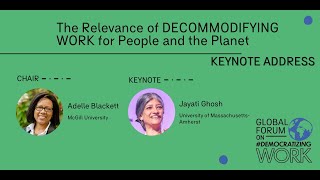
Plenary Keynote Lecture for Democratizing Work Conference

Access to vaccines and the Limiting role of Intellectual Property Rights and Pharma Monopolies
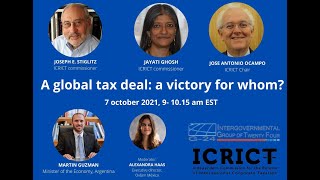
A global tax deal: A victory for whom?
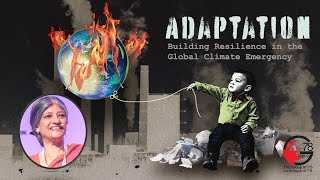
Why Adaptation: Building Resilience in the Global Climate Emergency

Feminist Economics with Jayati Ghosh
Three Decades of Neo-liberal Reforms in India: Critique and Resistance
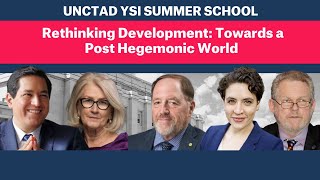
Rethinking Development: Towards a Post Hegemonic World
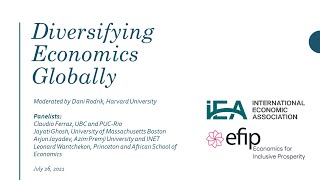
Diversifying Economics Globally – Part I

Panel on Globalization

Do Formalisation Policies help Women Workers?
Financialization and the Crisis of Capitalism
The Pandemic and the Economic Crisis: A Global Agenda for Urgent Action
Agrarian Change Seminar: 'Protests against the New Farm Laws in India'
How Can The Indian Economy Be Rescued?
The Green Renaissance: Unpacking a Green Recovery

INET Webinar: COVID-19 and the developing world
Webinar: Covid-19 Crisis and Emerging Economies
Webinar – The Coming Global Recession: Building an Internationalist Response
Coronavirus Lockdown has Already Done More Damage to Economy than Demonetisation'
Every single number in Budget 2020 is a lie

Taxing MNCs: The importance and the issues
Neoliberal Globalisation Delivers Slow Growth
GST & Demonetisation Disproportionately Affected Informal Sector
Prof. Jayati Ghosh speaks on India's Global Integration and its Implications
International Social Forum 2019 | Closing Plenary
Women in Agriculture : Challenges and Way Ahead

Big Discrepancy in Budget: Interview with JNU Prof Jayati Ghosh
Krishna Bharadwaj Memorial Lecture 2019

Amartya Sen in a conversation at a Book Release on the Indian Economy under Modi
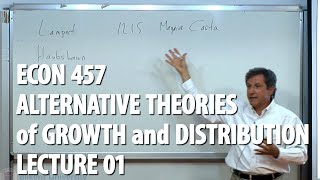
Lecture Series on Alternate Theories of Growth and Distribution
Jayati Ghosh on the Employment Crisis and Lack of Effective Demand in India

In Focus: with Prof. Prabhat Patnaik - Part I

Professor C. P. Chandrasekhar on amalgamation of three banks

Development and What it actually means
Prof. Prabhat Patnaik on Alternative Discourses in Macroeconomics
Prof. C. P. Chandrasekhar speaks on ‘Revisiting 'Capital' in the Age of Finance'
Prof. C P Chandrasekhar speaks on 'Karl Marx’s Capital & the Present’

EURODAD Conference 2017: Development Finance Landscape: Why Alternatives are needed